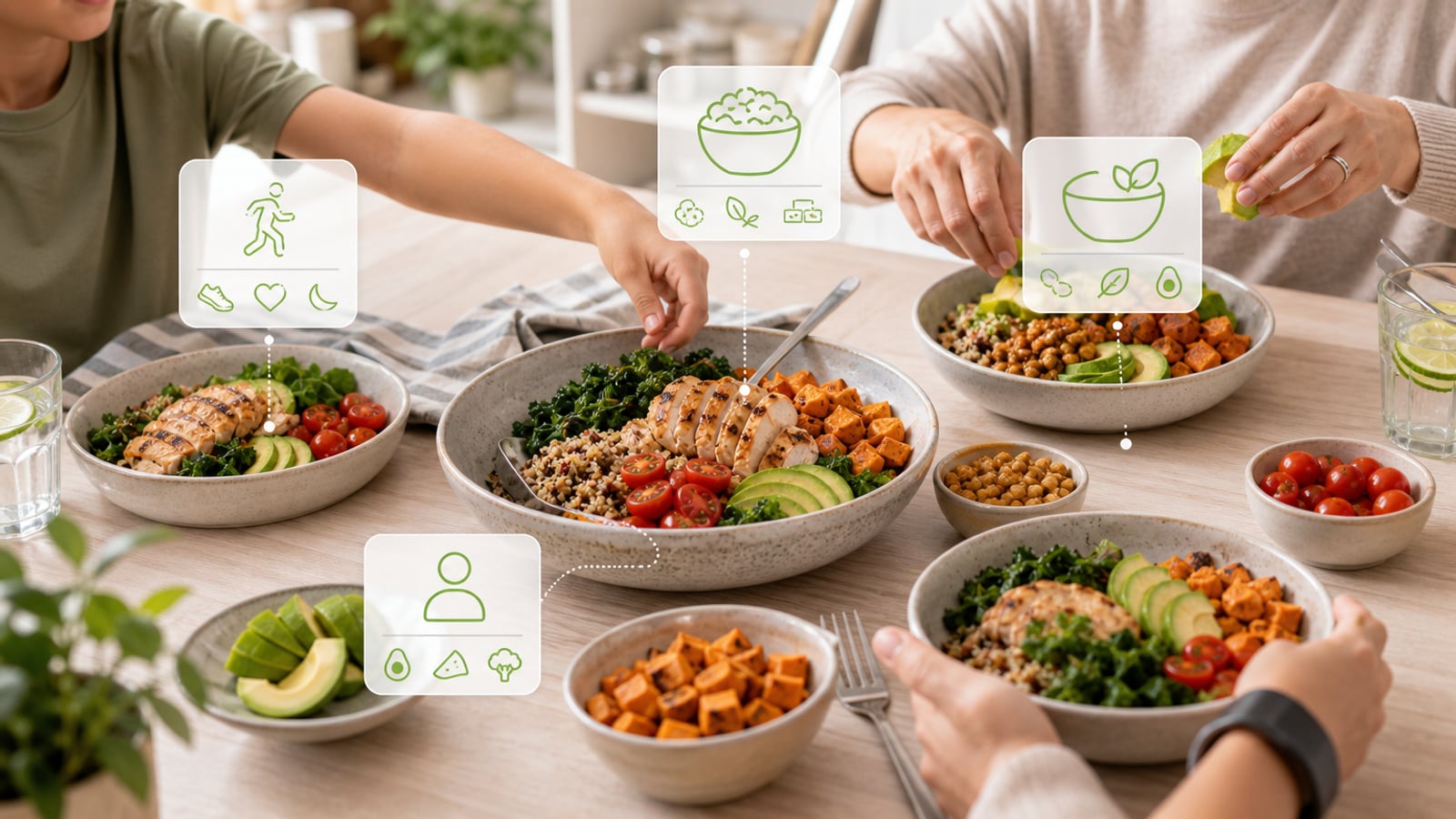
Evening after evening, you stand at the stove trying to figure out how to handle the fact that your partner is losing weight, your child needs more energy for sports, and you yourself are trying to eat more balanced meals. The solution isn't to cook three different meals, but to build dinner around one shared base that every family member can adjust to their own needs – through portion size, side dish, or an extra ingredient. This approach saves time at the stove as well as the energy you'd otherwise spend thinking up a second or third recipe.
The key is to separate what makes a meal a meal (protein, vegetables, flavor) from the variables that differ depending on the goal – the amount of carbs, the portion size, or the type of side dish. Once you've mastered this logic in the kitchen, only one practical question remains: how does everyone keep track of what they actually eat in their own version of the meal.
Why cooking twice isn't necessary
Cooking two or three variants of a meal is time-consuming and often leads to less varied cooking, because it's easier to reach for a tried-and-true recipe instead of experimenting. What's more, separately cooked meals are harder to plan ahead – shopping, preparation, and dishwashing all double.
A shared base solves this problem by focusing on what stays constant in the meal:
- Protein source – chicken, legumes, tofu, fish – prepared the same way for everyone.
- Vegetables or salad – steamed, roasted, or raw, again in a shared quantity.
- Basic preparation – the same seasoning, the same sauce or dressing as the flavor base.
The variables are then added individually: the size of the protein portion, the type of side dish (rice, potatoes, whole-grain pasta, or just extra vegetables), and optionally extras like nuts, cheese, or a bit of extra oil for whoever needs more energy.
How to build a meal with a shared base
A proven method is to cook "for the plate" instead of "for the pot." This means preparing the main components separately on a bowl or baking sheet, with everyone assembling their own plate according to their own needs. A practical example:
- Put roasted chicken breast on one baking sheet, roasted vegetables on a second one, and cooked rice or quinoa in a third bowl.
- Whoever needs more energy adds a bigger portion of rice and an extra piece of avocado.
- Whoever is focused on weight loss takes a smaller portion of the side dish and more vegetables.
- A child who needs more calories for sports adds a second portion of meat.
This principle also works for one-pot meals like chili, curry, or baked pasta – just prepare a base without too rich a sauce, and let everyone top it up individually according to taste and need.
How to keep track when everyone has a different portion
The problem arises when you want to know what you personally actually ate – not what's on the shared plate, but your specific amount. This is where it helps that FitAid recognizes a meal from a photo and splits it into individual components with an estimate of portions, calories, and nutrients. If you photograph your plate with chicken, rice, and vegetables, the app automatically recognizes the meal by component, so you don't have to work out how many grams of meat and how much of the side dish you actually served yourself.
Since this is an estimate, not an exact measurement, it's important to check and adjust the entry after taking the photo – for example, if you took a smaller portion of rice than average, or added an extra spoonful of sauce. FitAid lets you edit every item in a meal as well as its portion size, so you can fine-tune the final entry to exactly what you really ate, regardless of how much food the rest of the family served themselves.
When the evening is rushed and there's no time to take a photo
Not every evening allows time to photograph your plate – sometimes you're cooking in a rush and want the entry done in a moment. In that case, you can log a meal in FitAid by typing it in or dictating it by voice, or by scanning the nutrition label of the ready-made side dish or sauce you used. This means tracking your meals doesn't stop at photos – it also works on days when the family dinner was thrown together quickly from whatever was in the fridge.
Recurring family meals and quick logging
Families usually have a repertoire of five to ten meals that repeat in various variations. If you know that you regularly cook a certain combination – say, roast chicken with vegetables and potatoes – it makes sense to save that meal as a favorite in FitAid. Next time the same dinner comes around, you don't have to go through the whole recognition and editing process again – just select the favorite meal and, if needed, adjust the portion to match how much you served yourself this time.
This is especially useful for meals where only the quantity differs, not the composition – typically with family dinners built on a shared base, where you take a smaller portion of the side dish and your partner takes a bigger portion of meat.
Practical tips for planning shared meals
- Cook the components separately – protein, side dish, and vegetables on their own, so everyone can mix their own ratio.
- Prepare one basic sauce or seasoning and add any spicier or more intense variations directly to the plate.
- Buy the shared base ingredients in bulk and only adjust the side dishes or extra ingredients to each person's needs.
- Log your own portion, not a rough guess – especially for meals where components can easily be mistaken for a different weight than what you actually ate.
Cooking one meal for the whole family with individual portions doesn't require any complicated systems or a second pot on the stove. All it takes is splitting the preparation into a shared base and variables that everyone adjusts themselves – and having a tool on hand that helps you log exactly the portion you served yourself, whether that's a photo of your plate, a quick text entry, or a favorite meal from last week.